EOI Puff Pastry – Masterclass No. 1
Fat Incorporation Methods
Processing methods
Standard methods used for producing puff pastry are the Roll-in method (French/English method) and the Chop-in method (Scotch all-in method). These differ essentially by the way in which the fat or margarine is incorporated into the dough but the end result is much the same.
Roll-in methods
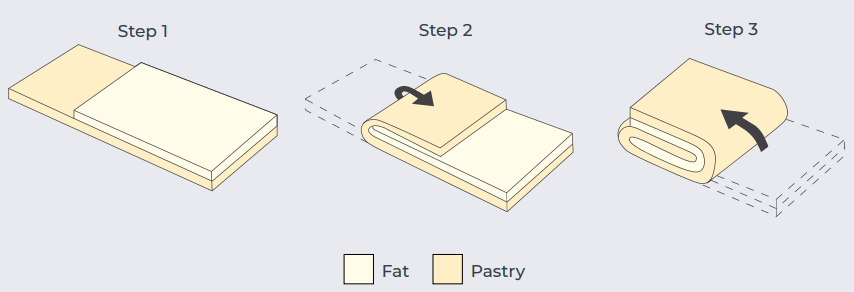
English roll-in method
The basic dough is made and allowed to relax for 20 minutes before being rolled out to approximately 1.5cm to 2cm (1/2” to 3/4”) thickness. The pastry shortening or margarine, then shaped to cover two-thirds of the dough surface. The dough is then folded over the shortening or margarine as in the diagram to give three layers of dough separated by two layers of fat.
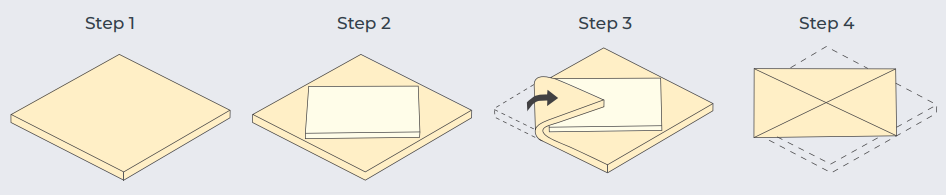
French roll-in method
After resting, the basic dough is rolled out to a square about 2.5cm (1”) thick. The pastry shortening or margarine is shaped into a square, then placed onto the dough as in the diagram. The edges are then folded in to encase the shortening or margarine to give two dough layers and one fat layer.
Chop-in method
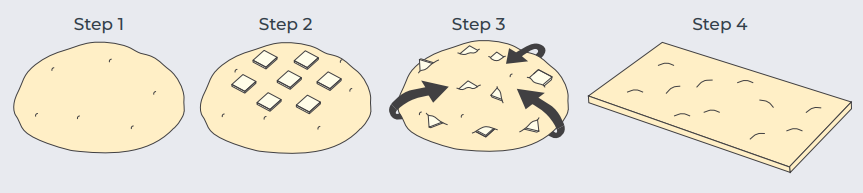
Scotch / all-in method
This method incorporates the pastry shortening or margarine at the dough stage. The pastry shortening or margarine, which has been conditioned by storage at working temperature, should be in a ready bits form. The basic dough is mixed but not fully developed. The pieces of shortening or pastry margarine are then added and lightly mixed. It is essential that these pieces should remain relatively intact. Over-mixing will result in poor lamination, as the laminating shortening or margarine becomes too finely dispersed through the dough and poor volume puff pastry may be produced. The dough is then rested for 20 minutes before turning.